





The PlayStation Blackout 2026, also being discussed online as #PSBlackout, asks PlayStation users around the world to step away from Sony’s ecosystem for seven days, from 7 p.m. local time on August 23 through 7 p.m. local time on August 30.
A week-long PlayStation boycott is officially getting underway, and this time the argument is about something bigger than a single game or controversial console feature.
The campaign asks participating players not to use their PlayStation consoles, log into PlayStation Network, play games or make PlayStation-related purchases during the protest period.
The immediate issue behind the campaign is Sony’s decision to stop producing physical discs for new PlayStation games beginning in January 2028.
Sony confirmed the change on July 1, saying new games released from January 2028 onward will be available digitally through the PlayStation Store and retailers, while games already released or scheduled to launch on disc before that date will not be affected.
For many U.S. gamers, that announcement has turned a long-running debate about digital versus physical games into something much more tangible.
Table of Contents
- What is the PlayStation Blackout?
- When does the PSBlackout start and end?
- Why are PlayStation fans boycotting Sony?
- What did Sony announce about physical games?
- What are players being asked to do?
- Why physical games still matter to some gamers
- Can the PlayStation Blackout actually hurt Sony?
- The biggest challenge facing the boycott
- What this means for PS5 owners
- What happens after August 30?
- Key Takeaways
- Conclusion
What Is the PlayStation Blackout?
The PlayStation Blackout is a grassroots consumer protest organized around concerns about the future of physical PlayStation games.
Rather than focusing on a particular title, the campaign is designed to temporarily reduce activity across Sony’s gaming ecosystem.
That makes it different from a traditional social-media protest.
Participants are being encouraged to stop using their PlayStation consoles and avoid spending money inside the ecosystem for an entire week. The campaign was promoted by Does It Play?, a group known for its focus on game preservation and physical media.
The basic message is straightforward: if players are unhappy with the direction of PlayStation, they can demonstrate that frustration through their wallets and their activity.
That is also why the campaign is attracting attention beyond the collector community.
The argument is no longer simply about whether someone personally prefers a disc or a download. It is becoming a broader discussion about ownership, preservation and how much control consumers should retain over the games they purchase.
When Does the PlayStation Blackout Start and End?
The timing is important because the protest is being organized around local time rather than one universal global timestamp.
| Event | Date | Time |
|---|---|---|
| PSBlackout begins | August 23, 2026 | 7:00 p.m. local time |
| Blackout continues | August 24–29 | All day |
| PSBlackout ends | August 30, 2026 | 7:00 p.m. local time |
| Total duration | 7 days | Worldwide |
The campaign therefore moves across time zones as the local clock reaches 7 p.m.
For U.S. PlayStation owners, the practical takeaway is simple: the campaign begins on Sunday evening, August 23, and runs through Sunday evening, August 30.
The organizers are calling for a full week of reduced PlayStation activity rather than a single-day demonstration.
Why Are PlayStation Fans Boycotting Sony?
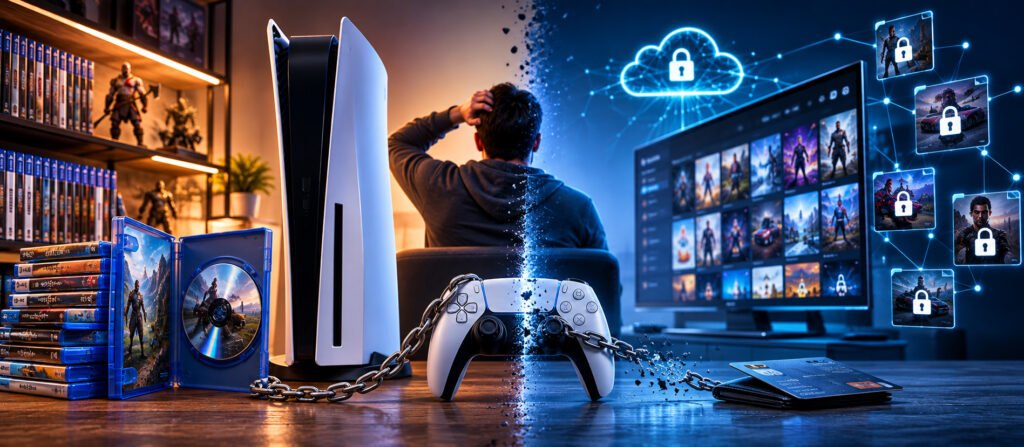
The central issue is Sony’s decision to end physical disc production for new PlayStation games in 2028.
For players who primarily buy digital games, the change may not seem particularly important.
For collectors, preservation advocates and gamers who value ownership options, however, the decision represents a major change in the console market.
A physical game can potentially be resold, traded, collected or preserved independently of a digital storefront.
Digital purchases work differently.
They can be tied to an account, platform and licensing system. Players may also depend on online services for downloads, updates or access to certain content.
That difference is at the heart of the current debate.
The frustration has also grown because the physical-disc announcement comes amid a broader industry shift toward digital distribution.
Sony’s official explanation is that consumer preferences have moved strongly toward digital media and that the company is adapting to those trends.
But some PlayStation fans see the move as removing an important choice rather than simply responding to consumer demand.
What Did Sony Announce About Physical PlayStation Games?
Sony’s announcement is more specific than saying that “PlayStation games are going digital.”
The company said that physical disc production for all new games releasing on PlayStation consoles will end starting in January 2028.
After that point, new titles will be offered digitally through the PlayStation Store and through retailers in digital formats.
Importantly, Sony also stated that the transition does not affect games that have already been released or games that will receive physical releases before January 2028.
That distinction matters.
A PS5 owner is not suddenly going to lose access to an existing disc collection because of this announcement.
The controversy is about the future supply of new physical releases.
In other words, the question being asked by the PlayStation Blackout is not simply:
“Will my existing games stop working?”
It is:
“Will I still have the option to buy new PlayStation games on physical media?”
That is a much larger consumer issue.
What Are Players Being Asked to Do During PSBlackout?
The campaign’s proposed actions are relatively simple.
Participants are being asked to:
- Turn off their PlayStation console.
- Avoid logging into PlayStation Network.
- Avoid playing PlayStation games during the blackout.
- Avoid purchases through the PlayStation ecosystem.
- Avoid additional PlayStation spending during the seven-day period.
- Use #PSBlackout when discussing the campaign online.
The idea is to combine reduced engagement with reduced spending.
That distinction is important because simply leaving a console switched off does not necessarily create the same economic impact as avoiding purchases.
The campaign therefore attempts to make the protest both a gameplay blackout and an economic boycott.
Why Physical Games Still Matter to Some Gamers
It is easy to dismiss the physical-media debate if you primarily download games.
But physical games still provide several benefits that digital purchases do not provide in exactly the same way.
1. Collecting
Physical editions give players something tangible to own and display.
For collectors, the box, disc and artwork are part of the experience.
2. Resale
A physical game can generally be resold or traded.
That creates a secondary market that does not work the same way for digital licenses.
3. Preservation
Game preservation is one of the strongest arguments behind the PSBlackout movement.
Preservation advocates worry about what happens when storefronts disappear, servers shut down or digital access changes.
A physical copy does not automatically guarantee permanent access to every part of a modern game, especially when patches or online services are required.
But supporters argue that physical media still provides an important preservation layer.
4. Retail Choice
Physical releases also give consumers another way to purchase games.
Retailers can discount inventory, shoppers can compare prices between stores, and buyers can sometimes find used copies at significantly lower prices.
5. Consumer Choice
Perhaps the simplest argument is choice.
A player who prefers digital downloads can continue buying digitally.
A player who wants a disc can have a different option.
The concern among physical-media supporters is that the second option may disappear for new PlayStation releases.
Can the PlayStation Blackout Actually Hurt Sony?
This is where the story becomes more complicated.
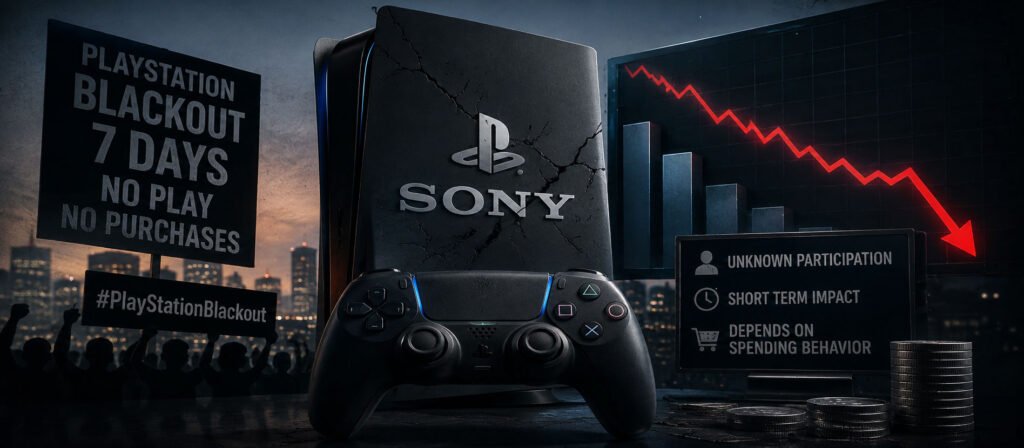
A seven-day boycott involving an unknown number of players is difficult to measure before it happens.
There is currently no reliable public figure showing exactly how many PlayStation owners will participate.
That makes claims about the campaign’s financial impact premature.
The boycott would need significant participation to create a meaningful measurable effect.
It would also need to affect spending rather than simply social-media discussion.
That is the fundamental challenge.
A gamer who does not turn on a PS5 for one week but buys the same game the following week has created a much smaller long-term economic effect than someone who permanently changes their purchasing behavior.
The campaign’s success therefore depends on more than the hashtag.
The Biggest Challenge Facing the PlayStation Blackout
The biggest problem may be getting millions of players to voluntarily stop doing something they enjoy.
Gaming is an entertainment habit.
For many PS5 owners, switching off the console for seven days is easy.
For others, particularly people with limited free time who use gaming as their main form of relaxation, the commitment is harder.
That divide is already visible in online discussions surrounding the campaign. Some PlayStation users have embraced the idea, while others question whether enough gamers will actually participate to make Sony pay attention.
There is another problem: the PlayStation ecosystem is enormous.
A successful boycott would need participation from a meaningful portion of the user base, not just highly active online communities.
That does not mean the protest is irrelevant.
Even a relatively small campaign can create significant public pressure if the message spreads widely enough.
But social-media visibility and financial impact are two different measurements.
What This Means for PS5 Owners
For an average PS5 owner, there is no technical requirement to participate.
The PlayStation Blackout is a voluntary consumer protest.
Your console does not need to be disconnected permanently, and Sony has not announced a service shutdown associated with the campaign.
Instead, the decision is entirely personal.
Players who support the protest can avoid PlayStation activity during the seven-day window.
Players who disagree with the campaign can continue using their consoles normally.
The more important question for PS5 owners is what happens to their purchasing choices after 2027.
If Sony’s announced strategy remains unchanged, new PlayStation games released from January 2028 will move to digital-only distribution.
That could make the next two years especially interesting for physical-game collectors.
Why the Timing Matters in 2026
The PlayStation Blackout arrives at an interesting moment for the gaming industry.
Digital distribution is no longer a niche alternative to physical games. It is a dominant part of the modern market.
At the same time, concerns about digital ownership, game preservation and access rights continue to attract attention from dedicated gaming communities.
The timing also means the debate is likely to continue long after August 30.
The blackout is only seven days.
Sony’s physical-media decision is scheduled to take effect in January 2028.
That gives the PlayStation community considerable time to continue discussing the issue, organize campaigns and evaluate whether consumer pressure changes anything.
The Broader Debate: Convenience vs. Ownership
At its core, the PSBlackout controversy is really a debate between two different visions of gaming.
The first prioritizes convenience.
Digital games are fast to purchase, easy to download and do not require shelves full of cases.
The second prioritizes ownership and choice.
Physical games provide a tangible product, can participate in resale markets and give collectors a way to preserve part of gaming history.
Neither side is completely unreasonable.
For many players, digital gaming is simply better.
For others, removing physical releases removes an important part of the gaming experience.
That is why this debate has become much larger than the disc itself.
It is about who controls access to games in the long term.
What Happens After August 30?
August 30 is unlikely to be the end of the discussion.
If participation is strong, the campaign could encourage additional consumer activism.
If participation is weak, Sony may have little reason to alter its strategy.
Either way, the blackout should provide an interesting snapshot of how strongly the PlayStation community feels about physical media.
There is also a practical question that remains unanswered: how will Sony respond?
As of the latest reporting, Sony has not announced a change to its January 2028 physical-disc plan in response to the campaign. Recent coverage has also highlighted continued fan backlash around Sony’s digital strategy.
That means the next few days will be less about an immediate policy reversal and more about measuring the size and persistence of the protest.
What U.S. PlayStation Fans Should Watch This Week
For American gamers following the story, several signals will be worth watching.
Participation
Are large numbers of PS5 and PS4 owners actually joining?
Social Media Activity
Does #PSBlackout continue gaining visibility throughout the week?
PlayStation Store Activity
Does the campaign appear to influence purchasing behavior?
Sony’s Response
Does Sony acknowledge the protest publicly?
Community Reaction
Do major gaming creators, collectors and publishers become involved?
These factors will tell us much more than the number of posts appearing on social media.
Key Takeaways
- PlayStation Blackout 2026 begins August 23 and ends August 30.
- The campaign is scheduled from 7 p.m. local time to 7 p.m. local time.
- Participants are being encouraged to avoid PlayStation consoles, PSN activity, gaming and purchases.
- The main issue is Sony’s decision to stop producing physical discs for new PlayStation games beginning in January 2028.
- Existing physical games and games receiving disc releases before January 2028 are not affected by the announced change.
- The campaign is focused on physical media, consumer choice and game preservation.
- Its actual financial impact is impossible to determine before participation can be measured.
- Sony has not announced a reversal of its physical-game strategy.
Conclusion
The PlayStation Blackout 2026 is not simply another internet gaming controversy.
It represents a much bigger argument about where console gaming is heading.
Sony believes the market is moving toward digital distribution, and its official announcement makes that direction clear: new PlayStation games will no longer receive physical disc production beginning in January 2028.
A section of the PlayStation community strongly disagrees with that future.
For those players, physical games are about more than convenience. They represent collecting, resale, preservation and the ability to choose how games are purchased.
Whether a seven-day boycott can influence one of the world’s largest gaming platforms remains uncertain.
But the conversation itself is unlikely to disappear.
For PS5 owners in the United States and elsewhere, August 23–30 will provide the first major test of how much support the physical-media movement can actually mobilize.
And when the blackout ends on August 30, the more important question may not be whether Sony noticed one week of reduced activity.
It may be whether PlayStation fans are willing to keep talking — and spending — differently long after the hashtag disappears from the trending list.
FAQs
What is the PlayStation Blackout 2026?
The PlayStation Blackout, or #PSBlackout, is a seven-day consumer protest asking PlayStation users to stop using and spending on the platform from August 23 through August 30, 2026.
When does PSBlackout start?
The campaign is scheduled to begin at 7 p.m. local time on August 23, 2026.
When does the PlayStation Blackout end?
It ends at 7 p.m. local time on August 30, 2026.
Why are PlayStation fans boycotting Sony?
The main issue is Sony’s decision to discontinue physical disc production for new PlayStation games beginning in January 2028.
Is Sony shutting down PlayStation?
No. The PlayStation Blackout is a voluntary consumer protest, not a Sony-ordered shutdown of PlayStation services.
Will existing PS5 discs stop working?
Sony’s announcement does not say that existing physical games will stop working. The change concerns physical disc production for new games beginning in January 2028.
Can I still buy physical PS5 games?
Yes. Physical releases are not being discontinued immediately. Sony’s announced change begins in January 2028 for new PlayStation games.
What does PSBlackout ask players to do?
Organizers are asking participants to avoid PlayStation activity, including logging into PSN, playing games and making PlayStation-related purchases during the protest.
Will the PlayStation Blackout change Sony’s decision?
It is too early to know. The campaign’s impact will depend on participation, spending behavior and whether Sony responds to the pressure.
Why do gamers care about physical games?
Physical games can provide collecting, resale and preservation benefits, while also giving consumers an alternative to account-based digital purchases.


No Comment! Be the first one.