





The MrBeast Ghana village project turns one of his biggest YouTube productions into a community development effort in Ghana. In his September 19, 2026 video, “I Built A City To Save Kids From Illegal Labor,” Jimmy Donaldson documents the creation of Abna Dakwa Village, a project reported to have cost nearly $10 million and designed to support families in a cocoa-growing community where child labor is a serious concern.
The project goes far beyond building a few houses for a video. Reporting from Ghana describes a new school for more than 300 students, 10 homes for teachers, clean-water systems, solar power, a medical clinic, a marketplace, sanitation facilities and agricultural infrastructure. The project also includes a plan to provide students with free school meals for five years.
For viewers, the scale makes the video striking. For the community, however, the more important question is whether education, reliable infrastructure and economic opportunities can reduce the pressures that contribute to children working instead of attending school.
What Did the MrBeast Ghana Village Project Build?
Abna Dakwa Village is located in Ghana’s Eastern Region. Local reporting says the development was created on previously undeveloped land after roughly a year of planning and about eight months of construction.
Education sits at the center of the project. The new school is designed for more than 300 students, while 10 furnished homes were built for teachers. Teacher housing matters because attracting and retaining educators can be difficult when adequate accommodation is unavailable near rural schools.
The development also includes clean-water infrastructure, solar power, a medical facility, a marketplace and improved sanitation. Agricultural facilities, including food-production systems, are intended to support local livelihoods and make the project more than a collection of new buildings.
Why the Project Focuses on Child Labor
Ghana is one of the world’s major cocoa-producing countries, and the International Labour Organization has documented efforts to eliminate child labor in its cocoa supply chain. MrBeast’s video frames the village as an attempt to address some of the conditions that can push children toward work, including limited access to schools, food, water and family income opportunities.
That distinction is important. A school alone cannot eliminate child labor. Families may face economic pressures that extend well beyond the classroom. The Ghana project therefore combines education with water, healthcare, energy, food and livelihood infrastructure.
The project should also be understood as one intervention in a much larger issue. Long-term progress depends on local institutions, families, government, industry and development organizations as well as philanthropic projects.
A School for More Than 300 Students
The new school is one of the most visible parts of the village. Reports describe a facility capable of serving more than 300 children, giving students a dedicated learning environment with improved infrastructure.
MrBeast’s team also built 10 homes for teachers. Providing nearby housing can reduce a practical barrier to staffing a rural school and may help teachers remain connected to the community they serve.
Another notable commitment involves school meals. The Rockefeller Foundation is supporting free meals for students for the next five years. Regular meals can matter for both nutrition and attendance, particularly when household finances make the opportunity cost of attending school significant.
Clean Water, Solar Power and Healthcare
The project’s infrastructure extends outside the classroom. Clean-water systems and water towers were installed to improve access to safe water. Solar infrastructure provides electricity to the school and community facilities, reducing dependence on unreliable or unavailable grid connections.
A medical clinic and sanitation facilities were also included. These additions reflect a broader development approach: children are more likely to benefit from education when their families also have access to basic health, water and sanitation services.
Beast Philanthropy describes its broader Ghana child labor initiative, while the Global Energy Alliance for People and Planet has publicly said it partnered with Beast Philanthropy to help power the new school and surrounding community with solar energy.
Building Economic Opportunities Into the Village
Abna Dakwa Village also contains a marketplace and agricultural infrastructure. Reports describe farming facilities, fish tanks and other food-production resources intended to support income generation and local food supply.
This is significant because the economic causes of child labor cannot be addressed only through messaging. When families have more reliable ways to earn income and meet basic needs, children may face less pressure to contribute through hazardous work.
Whether these facilities deliver durable economic benefits will depend on how they are managed after the cameras leave. That is one of the key long-term questions surrounding any high-profile philanthropic construction project.
Why This MrBeast Video Is Different
MrBeast is known for large-scale challenges, cash prizes and elaborate productions, but philanthropy has also become a major part of his online identity. The Ghana video combines the pacing and spectacle of a mainstream MrBeast upload with a development project intended to continue operating after the video’s release.
Donaldson described the project publicly as his most impactful video and said his years on YouTube had led to it. That statement is his own characterization, but the project is clearly larger in scope than a short-term giveaway: it combines physical infrastructure, education, utilities and multi-year support.
The video also demonstrates how creator-led philanthropy can attract enormous attention to issues that might otherwise receive limited exposure among younger online audiences.
The Bigger Question: Can Creator Philanthropy Produce Lasting Change?
Large creator-led projects can mobilize money and attention quickly, but their long-term value is best judged over time. Buildings require maintenance, schools need teachers and supplies, water and solar systems require upkeep, and livelihood programs need sustainable local management.
For that reason, the most meaningful measure of the Ghana project will not be the video’s view count. It will be whether students remain in school, infrastructure continues functioning, teachers remain supported and families gain sustainable alternatives to hazardous child labor.
The involvement of outside organizations may help with continuity. Still, independent long-term information will be important for evaluating outcomes beyond the launch period.
MrBeast’s Video Is Already Reaching a Huge Audience
Within days of release, third-party video trackers showed the September 19 upload accumulating tens of millions of views. View totals change rapidly, so a fixed number can become outdated quickly. The more durable takeaway is that the project has been exposed to an audience far larger than most traditional development campaigns can reach through a single piece of media.
Watch the Official MrBeast Video
What Happens Next?
The opening of Abna Dakwa Village is the beginning rather than the end of the story. The school, teacher housing, water systems, solar infrastructure, clinic, marketplace and farms now have to operate consistently enough to benefit residents over the long term.
For readers following MrBeast, the project is notable because it shows how a creator with a global entertainment audience can redirect that reach toward a complex social issue. For readers following development and the cocoa industry, it also raises useful questions about how private philanthropy can complement — but not replace — broader institutional solutions.
The Modern Side will continue watching for credible updates on the village, its school and the longer-term results of the project. Follow our News coverage for future updates.
Frequently Asked Questions
What is the MrBeast Ghana village?
It is Abna Dakwa Village, a community development project in Ghana’s Eastern Region featured in MrBeast’s September 2026 video. It includes education, housing, water, energy, healthcare and livelihood infrastructure.
How much did MrBeast’s Ghana village cost?
Multiple reports describe the project as costing nearly $10 million.
How many students can the new school serve?
Reporting on the project says the school was designed for more than 300 students.
Does the village have electricity and clean water?
Yes. Reports describe solar-power infrastructure and clean-water systems as major components of the project.
Why did MrBeast build the village?
The project is presented as an effort to give children and families in a cocoa-growing community stronger access to education and basic services, reducing pressures associated with child labor.
Where can I watch the video?
The video, titled “I Built A City To Save Kids From Illegal Labor,” is available on MrBeast’s official YouTube channel.
How Large Is Abna Dakwa Village?
Local Ghanaian reporting describes Abna Dakwa Village as a nearly $10 million development in Ghana’s Eastern Region serving a community of roughly 1,062 residents. The project was built on previously undeveloped land after about a year of planning and roughly eight months of construction.
The scale is important because the video title uses the word “city,” while the completed project is more accurately described in reporting as a new village or community development. Its significance comes from the concentration of school, housing, water, healthcare, food and livelihood infrastructure in one project.
Inside the New School
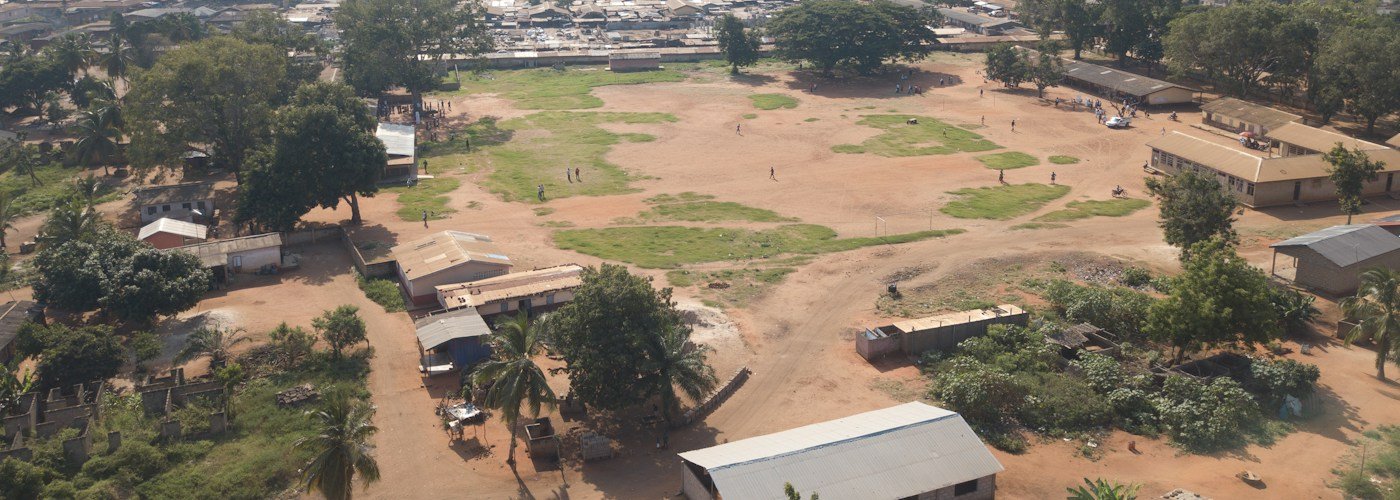
The school is designed for more than 300 students. Reporting on the build describes 10 classrooms, giving the community a dedicated education facility rather than relying on the conditions shown before construction.
A school building alone does not guarantee attendance, which is why the surrounding parts of the project matter. Teacher housing, meals, water, sanitation and safer access can all affect whether students and educators can use the school consistently.
Why the 10 Teacher Homes Matter
Ten furnished homes were constructed for teachers. In rural education, attracting and retaining staff can be difficult when teachers have no suitable housing near a school.
Providing accommodation does not solve every staffing challenge, but it removes one practical barrier. It also shows why the Ghana project should be evaluated as a system rather than as a single school-building donation.
Clean Water Infrastructure
The development includes clean-water systems and a water tower. Reliable water affects far more than drinking: it influences sanitation, cooking, school operations and household health.
Water infrastructure also reduces the time households may otherwise spend collecting water. Long-term success will depend on maintenance, local management and the availability of replacement parts—not only the initial construction.
Solar Power and Electricity
Off-grid solar infrastructure was installed to provide electricity. For a community project, dependable power can support classrooms, homes, water systems, healthcare facilities and small businesses.
As with water, long-term value depends on maintenance. Solar panels, batteries and electrical systems eventually require servicing, so sustainability should be judged over years rather than from the launch video alone.
The Medical Clinic
A medical facility is part of the new community. Local access to basic healthcare can reduce the burden of traveling long distances for routine needs and can complement improvements in water and sanitation.
The existence of a building is only one part of healthcare delivery. Staffing, medicines, equipment, referral systems and ongoing funding determine how useful a clinic remains over time.
Marketplace and Local Economic Activity
The project includes a community marketplace intended to support commerce and economic opportunities. That is directly relevant to the project’s child-labor framing because household income pressure can influence whether children remain in school or enter work.
Economic development is complex, and a marketplace cannot eliminate poverty by itself. Its value will depend on whether residents can build sustainable businesses and connect with customers and supply chains.
Agriculture, Fish Tanks and Chicken Coop
Food-production infrastructure is another notable part of the build. Reporting describes agricultural facilities, fish tanks and a chicken coop. These features are intended to support nutrition and livelihoods rather than make the village dependent only on outside donations.
That “productive infrastructure” is one of the more important elements to monitor because it can potentially create recurring value after construction crews leave.
Five Years of Free School Meals
Students are expected to receive a free meal on every school day for five years, with support from The Rockefeller Foundation, according to Ghanaian reporting.
School meals can matter for both nutrition and attendance, particularly where household food insecurity creates pressure on families. The five-year commitment also gives this part of the project a longer time horizon than a one-time video donation.
Why Child Labor in Cocoa Is a Larger Structural Issue
The cocoa supply chain spans farms, traders, processors, chocolate manufacturers, governments and international buyers. Child labor can be connected to poverty, limited school access, labor shortages and the economics of cocoa production.
That is why one village cannot be presented as a solution to child labor across Ghana or West Africa. The project can improve conditions for one community while the wider challenge still requires government policy, industry accountability, enforcement, education and household economic security.
What the Project Can Realistically Change
At the community level, the project can reduce practical barriers: distance from school, lack of teacher housing, limited clean water, weak sanitation and insufficient local services. Those are tangible changes.
What cannot be established immediately is the long-term effect on school completion, household income or child-labor rates. Those outcomes require follow-up data over time.
How to Evaluate the Project Beyond YouTube Views
The most useful questions one year, three years and five years from now will be operational: Is the school fully staffed? Are water systems functioning? Is the clinic serving residents? Are school meals continuing? Are agricultural projects producing food or income? Who pays for repairs?
Those questions do not diminish the construction effort. They are how large philanthropic infrastructure should be assessed after the launch attention fades.
MrBeast’s Official Video
MrBeast published I Built A City To Save Kids From Illegal Labor on his official YouTube channel on September 19, 2026. The roughly 19-minute video documents the construction process and the opening of Abna Dakwa Village.
This article uses the official MrBeast upload rather than a re-upload, consistent with The Modern Side’s policy for this experimental article series. Readers who want to see the construction sequence should use the official embedded video already included on this page.
What Is Confirmed and What Should Be Treated Carefully?
Reported and documented
- A nearly $10 million project in Ghana’s Eastern Region.
- A school for more than 300 students.
- Ten teacher homes.
- Clean-water and solar infrastructure.
- A medical clinic and marketplace.
- Agricultural and food-production facilities.
- Five years of school meals with Rockefeller Foundation support.
Claims that need long-term evidence
- How much child labor declines because of the project.
- Whether every facility remains fully operational for years.
- The project’s long-term effect on household income and school completion.
- Whether the model can be replicated economically in other communities.
What Readers Should Watch Next
Follow-up reporting will be more valuable than additional launch-day clips. Updates from local media, community leaders, education authorities and organizations involved in the project can show whether the infrastructure is producing durable outcomes.
The five-year meal commitment creates a particularly useful timeline for follow-up. School attendance, teacher retention and facility maintenance are other measurable areas to watch.
Frequently Asked Questions About MrBeast’s Ghana Village
Where is MrBeast’s Ghana village?
Abna Dakwa Village is in Ghana’s Eastern Region.
How much did the project cost?
Local reporting describes the project as costing nearly $10 million.
How many students can the school serve?
The new school is designed for more than 300 students.
How many teacher homes were built?
The project includes 10 furnished homes for teachers.
Does the village have clean water and electricity?
Yes. Reporting describes clean-water infrastructure and off-grid solar power as part of the development.
Are school meals included?
Students are expected to receive free school meals for five years with support from The Rockefeller Foundation.
Did MrBeast solve child labor in Ghana?
No single village project can solve a national or regional structural problem. The project aims to improve local conditions that can contribute to children working instead of attending school.
AI Shopping Agents in 2026: How They Work and How to Use Them Safely



[…] Modern Side has separately covered the MrBeast Ghana village project and included the relevant official MrBeast YouTube video […]
[…] is separately tracking notable MrBeast projects and business developments. Read our coverage of the MrBeast Ghana village project and the MrBeast Beast Band trademark […]