



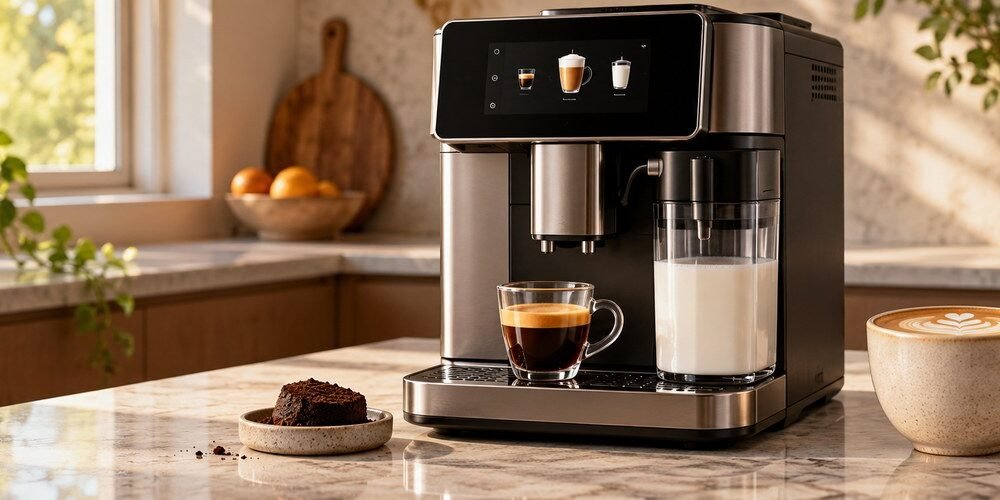
The Keurig Alta is an ambitious single-serve coffee launch. Instead of relying exclusively on conventional K-Cup pods, it introduces pressed-coffee portions called AltaRounds, high-pressure brewing and integrated milk frothing. It is designed to make brewed coffee, espresso-style drinks and milk beverages with less manual effort than a traditional espresso setup.
The early-access bundle was listed at $499.99, with estimated shipping beginning October 21, 2026. As of October 9, Keurig’s official website says the limited early-access bundle is sold out. This matters when considering the price: a launch offer is not the same as an immediately available retail product, and independent long-term testing is still limited.
Provisional verdict: The Alta looks promising for households that want K-Cup convenience and more ambitious coffee drinks in one appliance. It is harder to justify for people who drink only basic black coffee, already own an espresso machine or need a low upfront cost. This is a specification-based buying assessment, not a hands-on or taste-tested review. We will not invent flavor scores, noise measurements or reliability results.
Keurig Alta at a glance
| Feature | Current information |
|---|---|
| Early-access bundle | $499.99 at launch |
| Availability | Early-access bundle sold out October 9 |
| Expected shipping | Beginning October 21, 2026 |
| New coffee format | Pressed AltaRounds with plant-based coating |
| Traditional K-Cups | Compatible, confirmed by Keurig |
| Milk drinks | Integrated hot and cold frothing |
| Automatic settings | Recipe-code recognition |
| Biggest concern | High price, new proprietary portions, limited long-term evidence |
Verify the latest inventory and terms at Keurig Alta’s official website.
What makes the Keurig Alta different?
A typical single-serve brewer prioritizes convenience: insert a portion, press a button and receive a cup. Alta preserves that approach while trying to address two familiar limitations: waste associated with conventional capsules and the restricted drink menu of basic pod machines. Its AltaRounds use pressed coffee protected by a plant-based coating. The brewer reads a code associated with each portion and adjusts settings such as brewing style, pressure and temperature.
The machine also incorporates milk frothing and higher-pressure extraction for espresso-style drinks. The most practical surprise is that it remains compatible with traditional K-Cups. A household could continue brewing its familiar coffee while trying AltaRounds for specialty drinks. That compatibility reduces the pressure to abandon existing habits immediately.
What exactly are AltaRounds?
Keurig describes AltaRounds as compact portions of ground coffee held together with a plant-based protective coating rather than conventional plastic or aluminum capsules. The format is intended for high-pressure brewing and automated recognition. It is designed exclusively for the Alta system; the new rounds cannot simply be inserted into an older Keurig brewer.
The sustainability story requires nuance. The coffee portions are promoted as plastic-free, but reporting around the launch notes that individual portions currently use plastic freshness wrappers. Therefore, it would be misleading to say the complete retail packaging is free of plastic. The real environmental outcome depends on manufacturing, packaging, shipping, local composting facilities and machine longevity.
That does not make the new format unimportant. Reducing capsule materials could be useful. But shoppers who prioritize waste reduction should examine the whole system, including wrappers and disposal instructions, rather than relying on one marketing phrase.
Can the Alta make coffee and espresso?
Keurig lists brewed coffee, espresso, Americano, latte, cappuccino, cortado, flat white and iced coffee among the supported styles. This range is appealing for households where one person wants a large mug and another prefers a concentrated shot with milk. Automatic recipe recognition is designed to select suitable settings for the inserted portion.
Pressure and extraction are important for espresso-style drinks, but a machine’s published capabilities cannot establish the taste in your cup. Coffee freshness, roast, water quality, extraction, milk texture and personal preference all matter. A conventional espresso enthusiast may prefer control over grind size, dose and extraction time. Alta trades some of that control for a simpler workflow.
That trade-off is not inherently bad. A busy household may value a repeatable drink before work more than the ability to tune every variable. A coffee hobbyist may prefer the opposite. The right choice depends on whether coffee preparation is a routine or a hobby.
The integrated milk frother could be a major advantage
Many entry-level pod brewers need a separate frother for milk drinks. Keurig says Alta combines steam functionality with automatic hot or cold frothing, plus some manual control over milk texture. That could simplify a kitchen setup for people who frequently order lattes or cappuccinos.
It also creates additional cleaning responsibilities. Before buying, check the final user manual for the milk system’s rinse routine, removable parts, descaling schedule and cleaning products. A machine that saves two minutes during brewing but takes much longer to clean may not feel convenient after a few weeks.
There is not enough independent testing yet to assign a meaningful foam-quality score. Dairy and plant-based milks behave differently, and cold foam is not the same as steamed milk. Claims about café-quality microfoam should wait for repeatable tests.
Intelligent Brew Recognition: convenience or restriction?
Alta reads a code associated with each new portion and selects brewing conditions. That can reduce guesswork and make it easier to repeat a drink. The potential downside is dependence on a proprietary format. The launch information does not establish a broad third-party AltaRounds ecosystem, so buyers should not assume alternative brands and custom recipes will be widely available immediately.
If you enjoy experimenting with grind, ratio and extraction, a manual machine may be more satisfying. If you want an easy latte before leaving the house, automated recognition could be a benefit. Think about your actual routine before deciding which kind of control matters.
Does the Keurig Alta use regular K-Cups?
Yes. Keurig’s official FAQ confirms compatibility with traditional K-Cup pods. This is one of Alta’s most useful practical features because it gives existing Keurig households a familiar option alongside the new pressed-coffee portions.
Compatibility does not work in both directions. AltaRounds are designed for the Alta system, not older K-Cup machines. If you have more than one brewer at home, you may end up storing two types of portions. Confirm any cup-size or accessory limitations in the final manual before relying on it as a complete replacement for your current model.
Is the $499.99 price worth it?
Alta is expensive compared with a basic single-serve coffee maker. But comparing it only with the cheapest K-Cup machine overlooks its intended espresso and milk-drink functions. The better comparison is the cost of the entire setup you would otherwise need, plus ongoing coffee, milk and maintenance costs.
Household A: black coffee only
If everyone drinks straightforward brewed coffee, a simpler machine or drip brewer may satisfy the need at a much lower price. Alta’s advanced features would be underused, making the premium difficult to justify.
Household B: frequent lattes
If two people buy specialty drinks several times a week, a convenient at-home system could reduce café visits. Whether it saves money depends on the price of AltaRounds, milk, cleaning supplies and the drinks you would otherwise buy. No reliable fixed payback period can be calculated without verified ongoing consumable prices.
Household C: existing espresso equipment
Someone who already owns a capable espresso machine and grinder may not gain enough to justify replacing functional equipment. Alta may be faster or simpler, but the decision becomes one of convenience and counter space rather than necessity.
Calculate the real cost per drink
Use this formula: cost per drink = coffee portion + milk or flavorings + estimated maintenance + allocated machine cost. A hypothetical $500 brewer used for 1,000 drinks contributes $0.50 per drink in equipment cost before ingredients and maintenance. At 2,000 drinks, that allocated cost becomes $0.25. These are examples, not claims about Alta’s expected lifespan or AltaRounds prices.
Early-access bundle and shipping
Keurig’s official FAQ describes a bundle with the brewer, six boxes of AltaRounds and a FLUR glassware set. Each box contains eight portions, so that particular offer includes 48 rounds. The company estimates early-access shipments beginning October 21, 2026. As of October 9, the bundle is marked sold out, with an option to receive future availability notices.
Do not assume the same bundle contents, pricing or ship date will apply to future retail inventory. Check the seller, configuration and estimated delivery at checkout. An offer that existed at launch may not be available today.
Keurig Alta vs a regular K-Cup brewer
A conventional K-Cup machine generally wins on upfront price and simplicity. Alta adds more drink styles, high-pressure extraction and integrated milk frothing while retaining K-Cup compatibility. That versatility is useful only if you will use it. For someone who makes one black coffee every morning, a functioning basic brewer may still be the better value.
Keurig Alta vs Nespresso
Nespresso offers established capsule systems for espresso-style drinks, with different models and milk-frothing options. Prices and consumable formats vary. Alta’s distinctive advantage is combining a new pressed-coffee format with K-Cup compatibility. Nespresso’s mature capsule ecosystem may appeal to shoppers who value established availability. Compare exact models and long-term capsule costs rather than assuming either brand always tastes better.
Keurig Alta vs a manual espresso machine
A manual or semi-automatic espresso setup can offer control over beans, grind, dose and extraction. It may also require a grinder, a scale, practice and additional cleanup. Alta is aimed at people who want an integrated, repeatable workflow. Neither approach is universally superior; the choice depends on whether you enjoy making coffee or simply want a consistent drink quickly.
What about sustainability?
The plant-based AltaRounds design is a notable change in the single-serve market, but it does not settle the environmental question. The portion itself is described as plastic-free, while current freshness wrappers have been reported to use plastic. Local disposal rules and composting availability matter, as do packaging, transport and machine durability.
Buyers should seek precise disposal guidance and avoid treating “compostable” as a guarantee that every local facility accepts the material. A reusable filter, French press or standard espresso setup may have a different waste profile depending on use. Independent lifecycle evidence would be needed for a comprehensive comparison.
Potential disadvantages
Proprietary new portions
AltaRounds are not interchangeable with older brewers, and ongoing prices and third-party options are not yet fully established.
Cleaning complexity
Milk frothing and multiple brewing pathways may require more care than a simple pod machine.
High upfront cost
At approximately $500 for the launch bundle, the machine must provide enough convenience or replace enough other purchases to justify the investment.
Limited long-term evidence
Launch demonstrations cannot prove durability, repairability, failure rates or multi-year satisfaction.
Packaging questions
The pressed-coffee portions are marketed as plastic-free, but the complete retail packaging may still include plastic.
Who should buy the Keurig Alta?
Consider it if you regularly make both brewed coffee and espresso-style milk drinks, value automation, want K-Cup compatibility and are comfortable with premium pricing. It may be especially attractive if it could replace a basic brewer and separate frothing setup.
Wait for independent testing if you care strongly about espresso quality, foam texture, machine noise, cleaning time or reliability. Those questions cannot be answered responsibly from a feature list alone.
Skip it for now if you only want inexpensive black coffee, need an open coffee format or already have equipment that works well. An expensive appliance is not automatically better value.
Our provisional verdict
Keurig Alta is an interesting attempt to rethink single-serve coffee. Its strongest idea may be the combination of K-Cup compatibility, pressed-coffee portions, high-pressure extraction and integrated milk drinks in one automated appliance. That makes it more versatile on paper than a basic pod brewer.
The unresolved questions remain important: how the drinks taste, how easy the milk system is to clean, how durable the machine is and how much new portions cost after launch. For that reason, we would not assign a numeric review score or call it a category winner yet. It is a promising premium product to watch, not an unquestionable $500 purchase.
For related countertop-appliance buying context, see our Ninja Crispi Microwave Air Fryer review and Ninja SLUSHi review.
Frequently asked questions
Is Keurig Alta available now?
The official site marks the limited early-access bundle sold out as of October 9, 2026. Check for future inventory notices.
How much does Keurig Alta cost?
The early-access bundle was listed at $499.99. Future retail pricing and bundle contents may differ.
Can it use regular K-Cups?
Yes. Keurig confirms K-Cup compatibility. AltaRounds are exclusive to the Alta system.
Are AltaRounds completely plastic-free?
Keurig describes the pressed portions as plastic-free. Launch reporting says they currently use plastic freshness wrappers, so the complete packaging is not necessarily plastic-free.
Does it make real espresso?
Keurig markets high-pressure espresso drinks. Independent taste and extraction testing is needed to assess how they compare with other systems.
When will early-access orders ship?
Keurig estimates shipping beginning October 21, 2026. Delivery timing is not guaranteed.
Is this a hands-on review?
No. It is a pre-release buying assessment based on official specifications and current reporting, without invented taste or durability results.
Sources and editorial disclosure
- Keurig Alta official website and FAQ
- Keurig AltaRounds explanation
- The Verge on Alta preorders and packaging
- Wired launch analysis
Independent editorial assessment based on public information. No hands-on testing or paid sponsorship is claimed. Pricing and availability checked October 9, 2026.
Other Articles

Amazon Alexa Tablets 2026: Prices, Features and Google Play




No Comment! Be the first one.