





Target is facing fresh criticism after pulling a children’s Target clown Halloween costume from sale and apologizing for a design that social media users said resembled racist caricatures associated with blackface and minstrel shows.
The controversy centers on the “Kids’ Glows Under Blacklight Circus Clown Halloween Costume,” a seasonal product sold under Target’s Hyde and EEK Boutique brand. The item was listed for about $25 and featured a black-and-orange clown design, black gloves and a face covering with an exaggerated smile.
After images of the product circulated online, critics questioned how the costume and its marketing imagery had passed through Target’s product review process.
Target responded on August 24 by acknowledging the mistake, removing the costume from sale and apologizing to customers, particularly Black customers, employees and partners.
The incident is drawing attention in the U.S. not only because of the Halloween merchandise itself, but also because it arrives at a sensitive moment for Target. The retailer has been trying to rebuild customer momentum under CEO Michael Fiddelke after years of difficult sales and controversies surrounding its approach to diversity and inclusion.
Table of Contents
- What Happened With the Target Halloween Costume?
- Why Did the Costume Trigger Backlash?
- What Did Target Say?
- Was the Target Costume Removed From Sale?
- Why the Controversy Is Bigger Than One Halloween Costume
- How the Backlash Could Affect Target
- What Happens Next for Target?
- Key Takeaways
What Happened With the Target Halloween Costume?
The controversy began around a children’s circus clown costume sold by Target as part of its Hyde and EEK Boutique Halloween collection.
The product was marketed as the “Kids’ Glows Under Blacklight Circus Clown Halloween Costume.” According to reporting on the removed listing, the costume cost approximately $25.
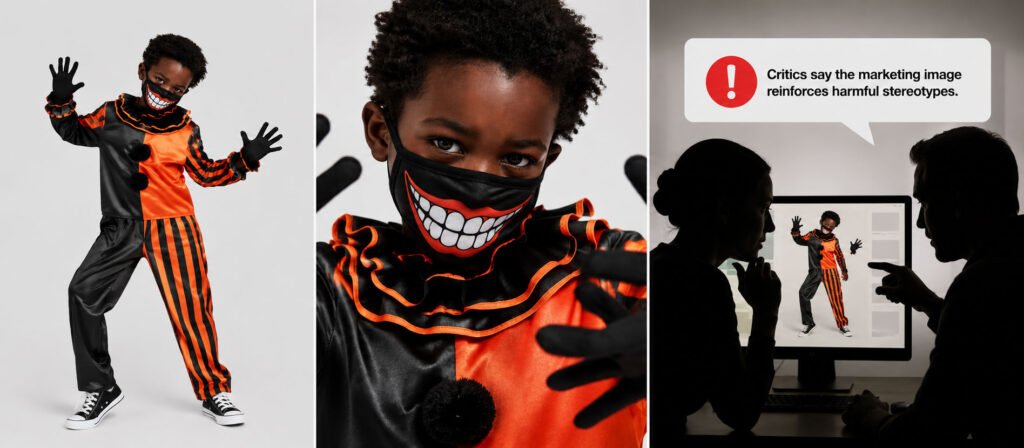
Images used to promote the product showed a Black child wearing the costume. The outfit included bright orange and black clothing, black gloves and a face covering featuring an exaggerated, wide smile.
Those visual elements quickly attracted criticism online.
Social media users argued that the combination of the face covering, gloves, styling and pose resembled racist caricatures historically associated with blackface and minstrel performances. The criticism was not simply about a clown costume being unusual or frightening; it focused on the historical associations some viewers saw in the imagery.
Reuters reported that the backlash spread across social media and that some consumers described the design as resembling a racist caricature.
Why the Product Became a Trending U.S. Story
Halloween merchandise regularly generates strong reactions online, but this case gained additional attention because it involved one of the largest retailers in the United States.
Target is a familiar shopping destination for millions of American families, making the controversy particularly relevant as parents begin shopping for Halloween.
The timing also matters.
Halloween products are already appearing prominently in stores and online as retailers compete for seasonal spending. A controversial product can therefore attract attention much faster when consumers are actively searching for costumes.
For Target, the issue is especially notable because the company is simultaneously working to rebuild its brand and regain shoppers.
Why Did the Costume Trigger Backlash?
The central criticism is that the costume’s visual presentation reminded some consumers of racist imagery from the history of American entertainment.
Blackface performances and minstrel shows used exaggerated portrayals of Black people as part of racist entertainment traditions. Those images remain deeply offensive because they were created and used to reinforce racial stereotypes.
Critics said the Target costume unintentionally echoed some of those visual characteristics.
It is important to distinguish between what critics alleged and what Target officially acknowledged.
Target did not say that the product was intentionally designed to reference blackface or minstrel imagery. Instead, the company acknowledged that the costume was offensive and should not have been included in its assortment.
That distinction matters when discussing the controversy accurately.
The issue is therefore less about proving an alleged intention behind the design and more about the company’s responsibility for how a product could reasonably be perceived by customers.
The Role of the Marketing Image
The promotional imagery also became part of the discussion.
The fact that the costume was modeled by a Black child drew additional attention because critics said the overall presentation intensified the resemblance they perceived to historical racial caricatures.
The Washington Post reported that the product image showed a Black child in an orange-and-black outfit with black gloves and a face covering featuring an exaggerated smile.
That meant the controversy was not limited to the physical costume itself.
Consumers were also questioning the creative and editorial decisions involved in photographing, presenting and approving the product for sale.
What Did Target Say?
Target issued an apology on August 24, acknowledging that the company had made a mistake.
The retailer said the costume was offensive, should never have been part of its assortment and was no longer available for sale.
Target also said the incident was especially hurtful for its Black guests, team members and partners.
The company described removing the costume as an important first step and said it was examining how the product reached its assortment and what changes might be needed to prevent a similar situation in the future.
This response is significant because Target did not merely announce that the item had been discontinued. The company directly accepted responsibility for allowing it into its assortment.
Target’s Response in Simple Terms
The company’s response can be summarized in four steps:
- The costume was removed from sale.
- Target publicly apologized.
- The company acknowledged the offense caused.
- Target said it would review how the product was approved.
That fourth point could ultimately become the most important part of the controversy.
Removing one product solves the immediate problem, but it does not necessarily explain how the product reached consumers in the first place.
Was the Target Costume Removed From Sale?
Yes.
Target said the controversial Halloween costume was no longer available for sale. Reuters and other reports also confirmed that the retailer pulled the product following the backlash.
The product was removed after criticism spread online.
However, screenshots and search-engine remnants can sometimes continue appearing after an e-commerce listing has been taken down. That does not necessarily mean the retailer is still selling the product.
The key verified point is that Target says the costume is no longer for sale.
Why the Controversy Is Bigger Than One Halloween Costume
The Target clown Halloween costume controversy comes at a complicated time for the retailer.
Target has spent much of 2026 trying to demonstrate that its business turnaround is working. On August 19, the company reported second-quarter net sales of $26.5 billion, up 5.3% from the previous year, while comparable sales increased 3.8%. Digital comparable sales increased 8.7%.
Target also raised its full-year 2026 sales outlook to growth of around 5%.
Those numbers suggest that the retailer has been making progress.
But reputation remains an important part of the equation for a major consumer brand.
Target has faced criticism in recent years over several cultural and political issues, including its handling of diversity, equity and inclusion initiatives. The latest Halloween controversy has therefore been viewed by some critics through the lens of those earlier disputes. Reuters noted that some critics connected the costume backlash with Target’s broader DEI-related decisions.
That does not mean the Halloween costume was caused by those policy changes. There is no verified evidence establishing such a direct connection.
Instead, the controversy has reopened questions among some customers about how Target approaches cultural sensitivity and internal product review.
How the Backlash Could Affect Target
It is too early to know whether the controversy will have a meaningful long-term effect on Target’s sales.
One viral product controversy does not automatically translate into a measurable nationwide boycott.
However, brand reputation can matter considerably in retail because consumers have many alternatives.
Walmart, Amazon, Costco and other retailers compete for the same household spending. If customers become uncomfortable with a retailer’s decisions, switching to another store can be relatively easy.
Target’s Recent Business Momentum
The timing makes the situation particularly interesting.
Just days before the Halloween controversy, Target reported stronger results and raised its annual outlook. The company said comparable sales grew 3.8% during the second quarter, with customer traffic increasing 3.6%.
Reuters reported that Target’s turnaround under CEO Michael Fiddelke was showing signs of gaining momentum, with the company benefiting from refreshed merchandise, lower prices and stronger digital sales.
That means Target was entering the controversy from a position of improving business performance rather than severe financial deterioration.
Still, the reputational risk should not be dismissed.
On August 25, Reuters reported that Target shares fell about 5% following the backlash, highlighting investor concerns about the possible impact of reputational problems on the retailer’s recovery.
A single day’s stock movement does not establish a long-term financial consequence, but it demonstrates how quickly a product controversy can become an investor story.
What Happens Next for Target?
The most important question now is whether Target’s promised review results in changes to its product approval process.
The company has not publicly identified who designed or approved the costume.
That leaves several unanswered questions.
Questions Target May Need to Address
- How did the costume pass the initial design review?
- Who reviewed the product imagery?
- Were cultural-sensitivity concerns considered before publication?
- Will Target change its approval procedures for seasonal merchandise?
- Will similar products already in development receive additional review?
- What specific changes will be made to prevent another incident?
Target has said it is looking closely at how the situation happened and what needs to change.
For consumers, the credibility of that promise may depend on what the retailer does next.
An apology can address the immediate controversy, but meaningful changes to internal processes are what could determine whether customers view the response as sufficient.
Why Parents and Halloween Shoppers Are Paying Attention
For parents, Halloween shopping is generally about finding costumes that are fun, recognizable and appropriate for children.
That makes product descriptions and marketing images especially important.
Retailers do more than simply sell costumes. They decide which designs enter their seasonal collections and how those designs are presented to customers.
The Target controversy shows why those decisions can carry consequences far beyond a single product page.
Parents and shoppers may also become more likely to examine Halloween merchandise before purchasing, particularly when a design has unusual imagery or cultural references.
For retailers, that means seasonal product reviews are not merely a merchandising exercise.
They can also be a brand-safety issue.
A Larger Lesson for Retailers
The controversy illustrates a broader challenge facing major retailers in the social-media era.
A product can move from an ordinary online listing to a national controversy within hours.
Traditional approval systems may involve multiple teams, but social media gives consumers the ability to examine products from different perspectives immediately.
That creates a difficult environment for retailers.
A design that appears harmless to one group may carry a completely different historical meaning for another.
The safest approach is not simply to react after criticism emerges. It is to identify potential problems before products reach customers.
That can involve more diverse review teams, stronger cultural-sensitivity checks and closer examination of marketing photography and product descriptions.
The Target case demonstrates why those safeguards can matter.
What We Know — and What We Don’t
| Question | Current status |
|---|---|
| Did Target remove the costume? | Yes |
| Did Target apologize? | Yes |
| Was the costume criticized on social media? | Yes |
| Did critics compare it to blackface or minstrel imagery? | Yes |
| Did Target say the costume was intentionally racist? | No |
| Did Target say the costume was offensive? | Yes |
| Did Target say it would review its internal process? | Yes |
| Has Target explained exactly who approved the product? | Not publicly |
| Is there evidence of a long-term financial impact? | Too early to determine |
This distinction is important because fast-moving social-media controversies can quickly produce claims that go beyond the verified facts.
Key Takeaways
The Target Halloween costume controversy developed rapidly, but the central facts are straightforward.
Target sold a children’s circus clown costume that drew criticism online because some consumers said its design resembled racist caricatures associated with blackface and minstrel imagery.
The company subsequently removed the product from sale and apologized.
Target acknowledged that the costume was offensive and said it should never have been included in its assortment. The retailer also said it was reviewing how the product reached the market.
The controversy comes at an important moment for Target.
The company has recently reported improving sales and raised its 2026 outlook, suggesting that its turnaround strategy is gaining traction.
But the latest backlash shows that financial recovery and brand reputation can move on very different tracks.
For Target, the next test may not be the apology itself.
It may be whether customers see evidence that the company’s product-review process has actually changed.
Conclusion
The Target clown Halloween costume controversy is a reminder of how quickly a retail product can become a national news story when consumers identify potentially offensive imagery.
Target has taken the immediate step of removing the costume and apologizing. The company has also acknowledged that the product should never have reached its assortment and promised to examine what went wrong.
Whether that response is enough will likely depend on what happens next.
For now, the verified facts are clear: the costume is no longer being sold, Target has apologized, and the retailer says it is reviewing its internal processes.
As Halloween shopping accelerates across the United States, the controversy is likely to remain part of the wider conversation about how major retailers design, review and market products for increasingly diverse consumers.
The bigger question for Target is not simply how it handles one controversial costume.
It is whether the company can turn this mistake into a stronger product-review process while maintaining the customer trust it has been working to rebuild.
Source Context
This report is based on current reporting from Reuters, The Washington Post and Target’s own corporate statement, with additional current reporting used to understand the wider business context.
Current U.S. Trend Angle
The strongest U.S. audience angle is the combination of Target + Halloween + social-media backlash + racial-sensitivity debate + brand reputation. The story is particularly timely because it broke just as Target was reporting improving sales and heading into the critical fall and holiday retail period.
FAQs
Why did Target remove the clown Halloween costume?
Target removed the costume after social media users criticized its design and said it resembled racist caricatures associated with blackface and minstrel imagery. Target later acknowledged that the costume was offensive and should never have been part of its assortment.
What was the Target Halloween costume called?
The product was listed as the “Kids’ Glows Under Blacklight Circus Clown Halloween Costume.”
How much did the Target clown costume cost?
Reports identified the costume as a roughly $25 product.
Did Target apologize?
Yes. Target issued an apology on August 24, 2026, saying the company had “got this wrong” and that it was deeply sorry.
Is the Target clown Halloween costume still available?
Target says the costume is no longer available for sale.
Did Target say the costume was intentionally racist?
No. Target acknowledged that the product was offensive, but it did not say the costume was intentionally designed to reference blackface or racist imagery.
Why are people connecting the controversy to Target’s DEI policies?
Some critics have connected the latest controversy with Target’s earlier decisions involving diversity, equity and inclusion initiatives. However, there is no verified evidence showing that the costume itself was directly caused by those policy changes.
Could the controversy hurt Target financially?
It is too early to determine the long-term financial effect. Target was recently reporting stronger sales and a higher 2026 outlook, but Reuters reported that its shares fell about 5% on August 25 amid the backlash.


No Comment! Be the first one.